
Senior Wellness
The Five Fall Risks Hiding in Every Senior's Home
One in four adults over 65 falls each year, and most falls happen at home. The fixes are simpler — and cheaper — than most people think.
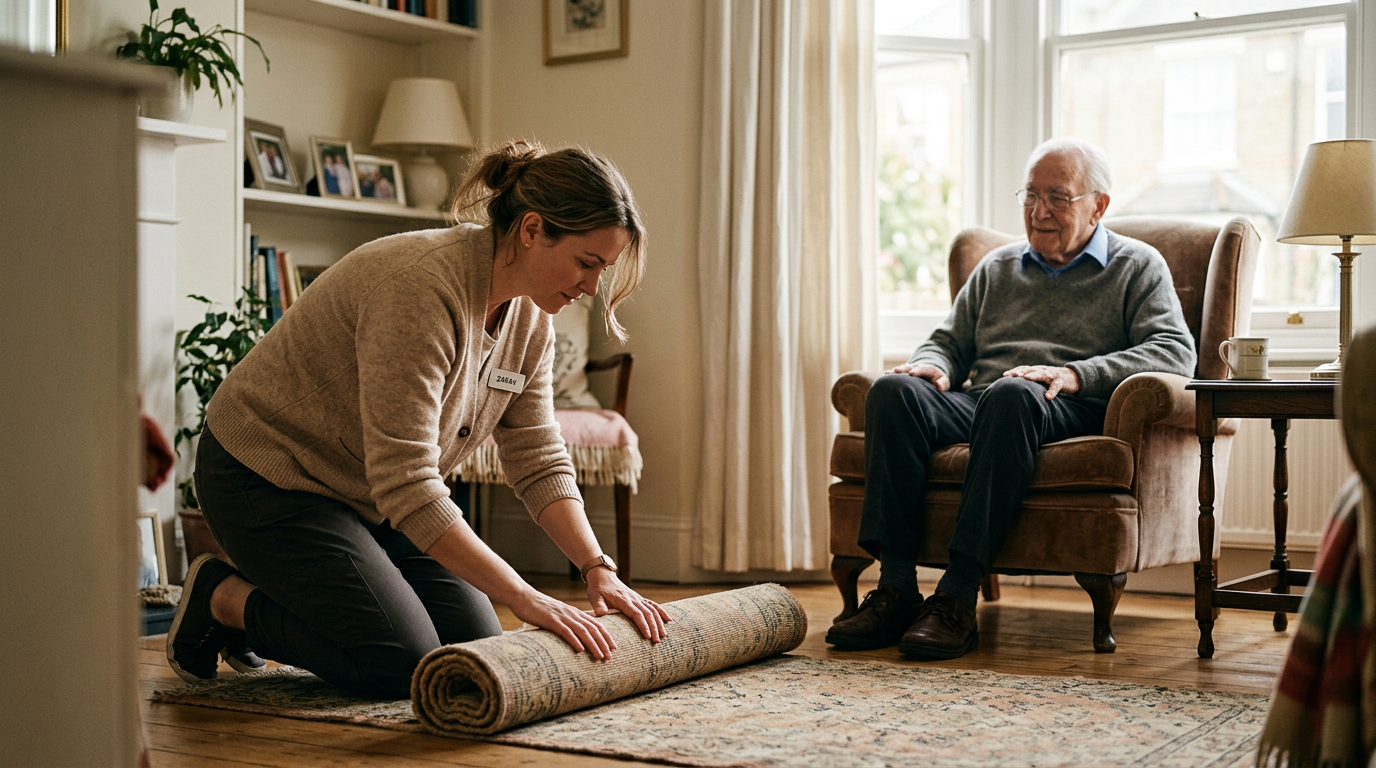
A fall is rarely just a fall. For an older adult, it's often the moment the trajectory of life changes — from independent at home to a hospital bed to a rehabilitation facility to never quite the same.
The good news: most falls are preventable, and the risks are predictable.
1. Throw rugs
The number one tripping hazard. Rolled edges, slippery backings, and bunched corners send thousands of seniors to the ER every year. The fix is free — remove them. If you must keep one, secure it with double-sided rug tape.
2. Poor lighting on the path to the bathroom
Most nighttime falls happen between bed and toilet. A $15 plug-in motion-activated nightlight along the route eliminates the most dangerous walk of the day.
3. Unsupportive footwear
Loose slippers, socks on hardwood, walking around in stocking feet. Closed-back shoes with non-slip soles, worn even at home, reduce fall risk significantly.
4. Medications that affect balance
Sleep aids, blood pressure medications, antidepressants, and antihistamines can all cause dizziness. Ask the pharmacist for a 'medication review' — they'll do it for free, and they often catch interactions doctors miss.
5. Loss of leg strength and balance
The single best fall prevention intervention is exercise. Tai chi, specifically, has been shown in multiple studies to reduce fall rates by up to 50%. So does standing from a chair 10 times in a row, twice a day.
If a fall does happen
Don't rush to stand up. Check for pain. If able, roll to your side, rise to hands and knees, crawl to a sturdy chair, and use the chair to stand. Then call someone — even if you feel fine. Subtle injuries can take hours to surface.


When you're ready, we're here.
A free in-home assessment with one of our care managers — no pressure, no obligation. Just an honest conversation about what would actually help.