Memory Care · Our specialty

Care that meets your loved one where they are today.

Dementia and Alzheimer's are not just memory problems — they are full-body, full-day, full-family experiences. Every EverCare caregiver is trained for exactly that, before they ever step into your home.

In-home memory care is specialized non-medical care delivered in your loved one's own home by caregivers trained in dementia and Alzheimer's behaviors. EverCare provides in-home memory care, in-home dementia care, and in-home Alzheimer's care across Oakland, Macomb, and Wayne counties, with same-day start, hourly pricing, and the same trained caregiver every visit.

Last updated: May 2026

A caregiver attentively listening to an older client in her living room.

What memory care looks like at home

A calm predictable rhythm — built around one familiar face.

A typical morning begins quietly. The same caregiver lets themselves in at the same time, greets your loved one with the same calm voice, and starts the routine they know — coffee in the same mug, the radio at the same volume, breakfast at the same little table by the window. Familiarity is the medicine. Surprise is the enemy.

From there, the day unfolds at the pace your loved one can hold: a gentle bath without a fight, a walk through the garden, a phone call to a grandchild, a favorite song from 1962 played twice. Medications come at the right hour, hydration is tracked quietly in the background, and meals are made in the kitchen they raised their family in. Every visit ends with a written note for the family — what we noticed, what changed, what made them smile.


Care at every stage

We adapt as the disease changes.

01
Early stage

Subtle changes. Big questions.

Forgotten appointments, repeated stories, a growing pile of unopened mail. We provide gentle structure — medication reminders, calendar prompts, companionship — so your loved one stays independent longer, with grace.

02
Middle stage

Routine becomes everything.

Bathing, dressing, and meals start to feel hard. Sundowning sets in. Our caregivers bring the same calm voice and the same predictable rhythm to every visit — because in middle-stage dementia, familiarity is medicine.

03
Late stage

Comfort, dignity, presence.

Around-the-clock support with full personal care, transfers, and end-of-life comfort. We coordinate with hospice when appropriate, and we never leave your family alone in the hardest hours.


2-Minute Care Assessment

Not sure what level of care your family needs?

Eight honest questions, two minutes, a personalized recommendation. No obligation, no pressure — just clarity.

Take the Care Quiz →

Used by 200+ Oakland, Macomb & Wayne County families


What our caregivers do differently

Trained for dementia, not just trained for tasks.

Most home care training covers the basics — transfers, bathing, meal prep. Our memory care curriculum goes further, because dementia care is about how as much as what.

  • Validation therapy (we never argue with the disease)
  • Calm redirection during agitation or sundowning
  • Reminiscence work using familiar photos and music
  • Structured routines that protect sleep and reduce anxiety
  • Gentle, dignified bathing and dressing — no fights
  • Safe-home setup: lighting, signage, fall reduction
Caregiver gently walking with an older woman.
Caregiver and older woman playing a board game.

How we know what each stage of dementia needs

Three stages, three tiers, one steady plan.

Mild stage often hides in plain sight — repeated questions within minutes, a stack of unopened mail, the same story told twice at lunch. Families usually feel uncertain rather than alarmed. This is when our Tier 1 Companion Care fits best: a few mornings a week to keep routines steady, prevent missed medications, and give the family caregiver a real exhale before exhaustion takes hold.

Moderate stage is when the disease begins to shape the day. Bathing becomes a battle. Sundowning starts at four. Wandering and exit-seeking turn the front door into a worry. This is what Tier 2 Memory Care Essentials is built for: daily, dementia-trained presence, hands-on personal care, and behavior strategies that de-escalate instead of medicate.

Severe stage brings full physical dependence — transfers, feeding assistance, incontinence care, and often hospice coordination. Tier 3 Comprehensive 24/7 Care wraps the household with around-the-clock support and end-of-life comfort, so your loved one can remain home through the very last chapter, with dignity intact.



What sets EverCare's memory care apart

The small choices most agencies skip.

Paid certified memory care training

Every caregiver completes our dementia curriculum — Alzheimer's, vascular, Lewy body, and frontotemporal — before their first shift, and they're paid for every hour of it. Continuing education is built into the role, not bolted on.

Same caregiver, every visit

One primary caregiver. One trained backup who already knows the care plan. We do not rotate strangers through your loved one's living room. In dementia care, the face matters as much as the skill.

Behavior expertise, not just task lists

Validation, redirection, sundowning protocols, and dignified bathing techniques — the things that turn a hard hour into a calm one. Our care coordinators coach each case continuously, not just at intake.

A 24/7 family line, answered by a person

Direct text and phone access to your care coordinator — not a call center. Falls, hospital discharges, and three-a.m. worries don't follow business hours, and neither do we. (586) 326-3256.


The honest comparison

When in-home memory care is the right choice — and when a facility might be.

In-home memory care is almost always the calmer choice in early and middle stages. Familiar surroundings reduce confusion, sundowning, and the catastrophic decline many families see in the first weeks after a facility move. With the right hours and the right caregiver, most people with dementia can safely remain home well into the late stage — and often through hospice.

A memory care facility may genuinely be the better answer when 24-hour skilled nursing is required, when the home cannot be made structurally safe for advanced wandering, or when there is no family within reach to coordinate care alongside us. We will tell you honestly when that line has been crossed. We would rather give you the right answer than the easy one — and many of our families end up choosing home for years longer than they thought possible.


For the family caregiver

We care for the whole family, not just the person with dementia.

Caregiver burnout is the silent crisis behind every dementia diagnosis. We give you the hours back — so you can sleep, work, breathe, or simply be a daughter or a husband again, instead of a 24/7 nurse.


Frequently asked

Memory care, honest answers.

What stages of dementia does in-home care work best for?

All of them — early, middle, and late. In early-stage dementia, a few visits a week can hold routines steady, prevent missed medications, and keep your loved one independent longer. In the middle stage, when bathing, sundowning, and behavior changes start to overwhelm family caregivers, daily dementia-trained support becomes the difference between coping and crisis. In late-stage and end-of-life, our caregivers provide full personal care, transfers, and comfort — often alongside hospice — so your loved one can stay home through the very last chapter.

What specific dementia training do EverCare caregivers complete?

Every EverCare caregiver completes our certified memory care curriculum before their first shift — covering Alzheimer's, vascular dementia, Lewy body, and frontotemporal dementia. Training includes validation therapy, calm redirection, behavior de-escalation, sundowning management, dignified bathing techniques, fall prevention, and recognizing the difference between a behavior and a medical change. Beyond the initial training, caregivers receive ongoing case-specific coaching from our care coordinators — because no two people with dementia are the same, and the textbook only takes you so far.

How do you handle sundowning, redirection, and bathing resistance?

We never argue with the disease. When sundowning hits — usually late afternoon — we lower lights, reduce noise, simplify the environment, and shift to soothing routines built into the care plan. For redirection, we use validation: meeting your loved one in the reality they're in rather than correcting them out of it. Bathing resistance is almost always about fear, cold, or loss of control, not stubbornness; we slow everything down, warm the room, narrate gently, and protect dignity. The fights you've been having usually stop within a week or two.

Can you coordinate with my loved one's neurologist or geriatrician?

Yes, and we do this routinely. With your written permission, our care coordinator becomes a second set of eyes for the medical team — tracking changes in cognition, sleep, appetite, mood, and behavior between appointments and flagging anything that should be discussed. We can prepare visit summaries, send observations to the office, and join telehealth appointments when helpful. Many families tell us this is the first time they've felt like the medical side and the day-to-day side were finally talking to each other.

Is in-home memory care covered by Medicare or long-term care insurance?

Traditional Medicare does not pay for non-medical in-home care like ours, but long-term care insurance often does — and many policies cover companion, personal, and dementia care under our exact service description. We help families read their policy, understand the elimination period, and submit the claim paperwork. Veterans benefits (Aid & Attendance) can also offset costs significantly. For a clear picture of what your specific policy will and won't cover, call (586) 326-3256 and we'll walk through it with you.

What's the difference between memory care and companion care?

Companion care is supportive, social, and preventative — meals, light housekeeping, errands, conversation, gentle activity. It's perfect for early-stage cognitive change or for relieving an exhausted family caregiver. Memory care is everything in companion care plus dementia-specific clinical training: hands-on personal care, behavior management, sundowning protocols, and structured routines built around your loved one's specific stage and history. Most families start with companion care and grow into memory care as needs change. We help you choose the right starting point at the free in-home assessment.


Inside the EverCare day

Specialized memory care that meets your loved one where they are — calm, dignified, familiar.

Smiling EverCare nurse hugging an older woman in a bright kitchen during a memory care visit.
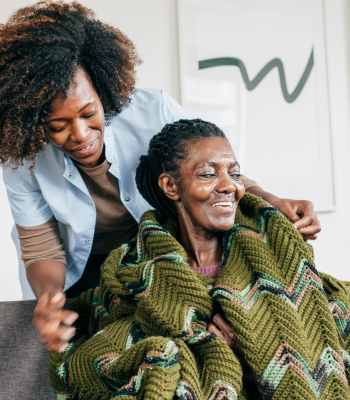
Caregiver wrapping a warm blanket around an older woman with dementia at home.
Caregiver in green scrubs reassuring an older woman seated in a wheelchair in her sunlit living room.

The right time to call is the moment you first wonder.

A real person answers, day or night. Most families are matched with a caregiver within 24 hours.

CallFree Assessment