
Memory Care
Why Music Reaches People When Words No Longer Do
The brain's musical memory is preserved long after other systems fade. Here's how to build a personalized playlist that brings your loved one back.
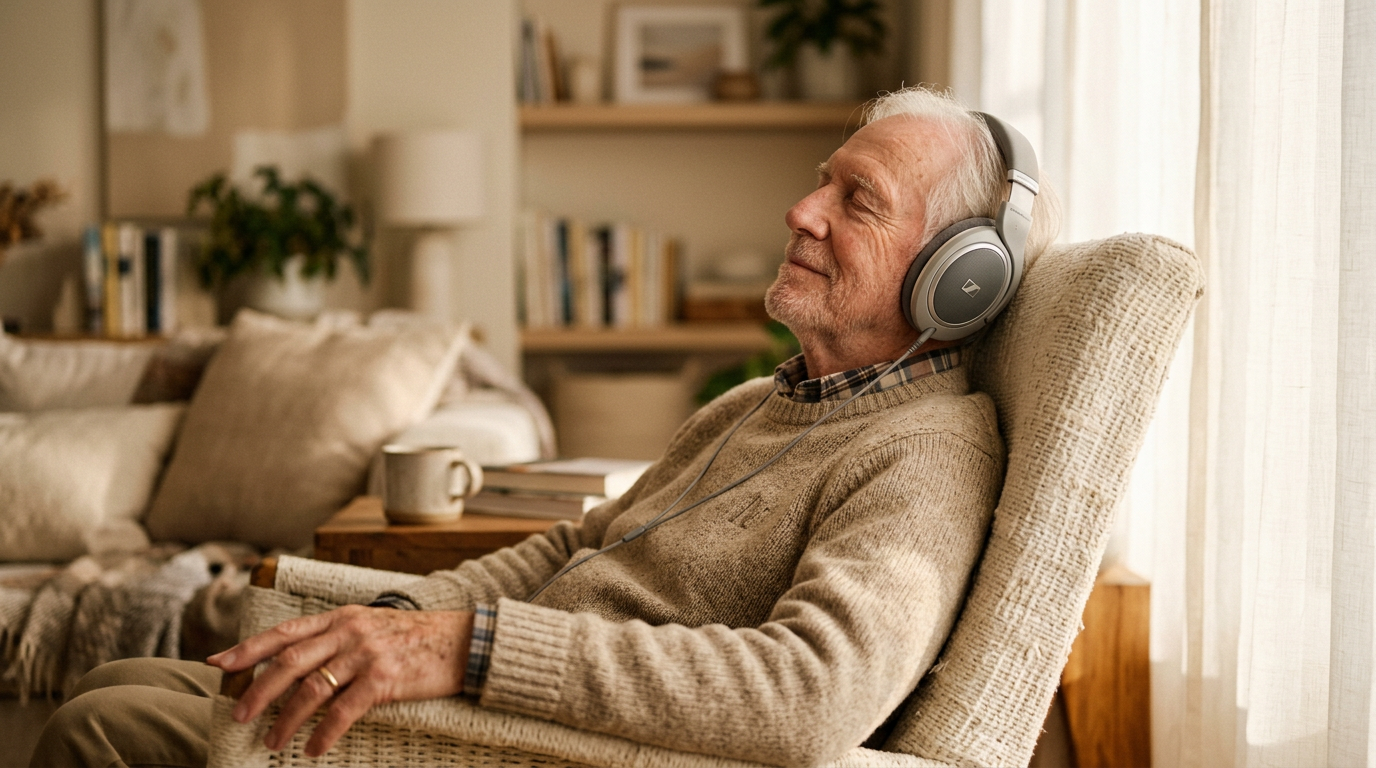
There is a moment our caregivers see often. A woman who hasn't spoken a clear sentence in months hears the first three notes of a song from her wedding — and sings the entire chorus. Her daughter, standing in the doorway, cries.
This isn't a miracle. It's neuroscience.
Why music survives
Musical memory lives in regions of the brain — the cerebellum, the auditory cortex, parts of the medial prefrontal cortex — that Alzheimer's damages last. Songs learned between roughly ages 10 and 25, when the brain is most plastic, are encoded most deeply of all.
That's why a 1956 song works when a 2010 song doesn't. The brain isn't reaching for music; it's reaching for identity.
How to build a personalized playlist
Ask family for the songs that played at their wedding, in their parents' kitchen, at the high school dance, at church on Sunday mornings. Aim for 30–50 songs. Use a simple device — a single-button MP3 player or an old iPod — not a complicated app.
Play it during the hardest parts of the day: the morning routine, the late afternoon, during personal care. Watch what happens to their shoulders, their breathing, their face.
What to avoid
Loud TV news in the background. Multiple sound sources at once. Modern unfamiliar music. Anything jarring, even if it's beautiful — the brain that can't filter sound experiences it as chaos.


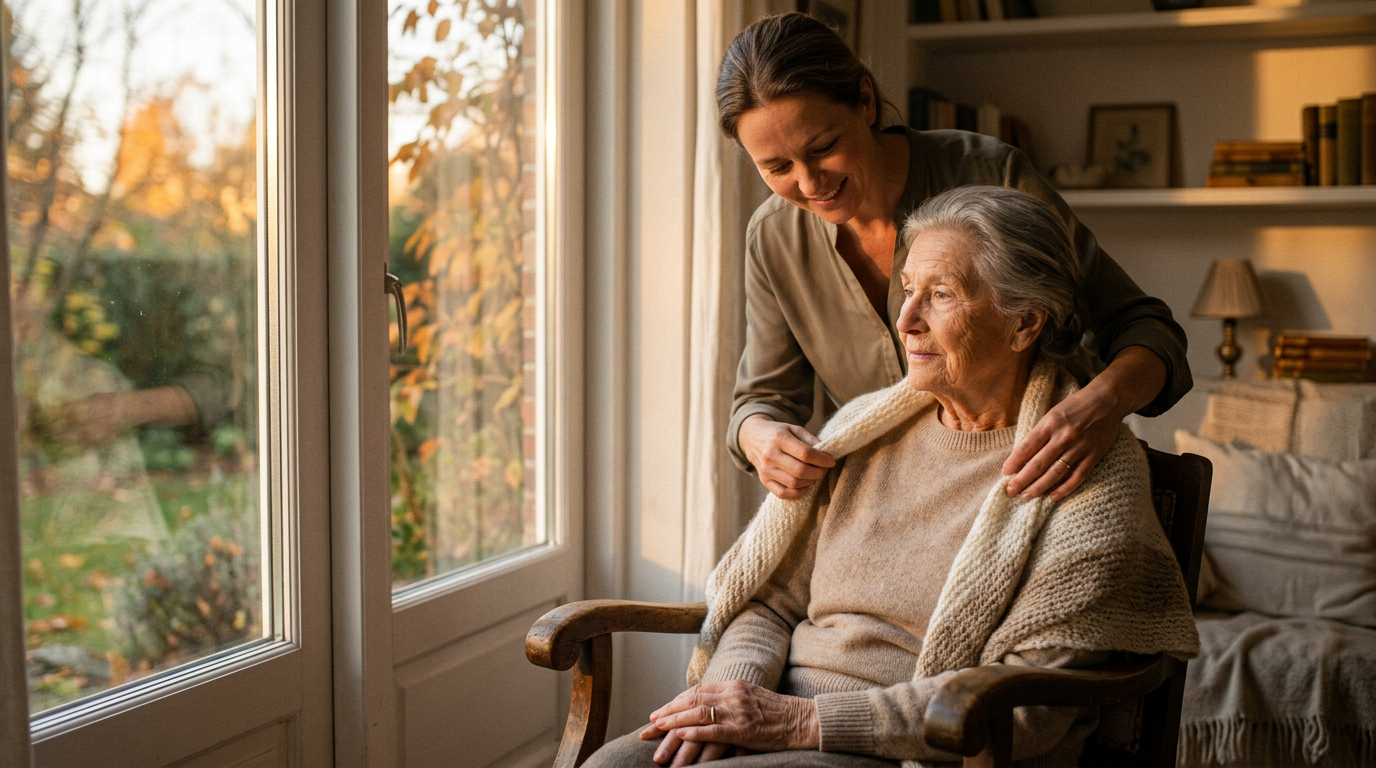
When you're ready, we're here.
A free in-home assessment with one of our care managers — no pressure, no obligation. Just an honest conversation about what would actually help.