
Senior Wellness
What Aging Bodies Actually Need on the Plate
Appetite shrinks, taste changes, and cooking gets harder. Here's how to keep nutrition strong without complicated meal plans.
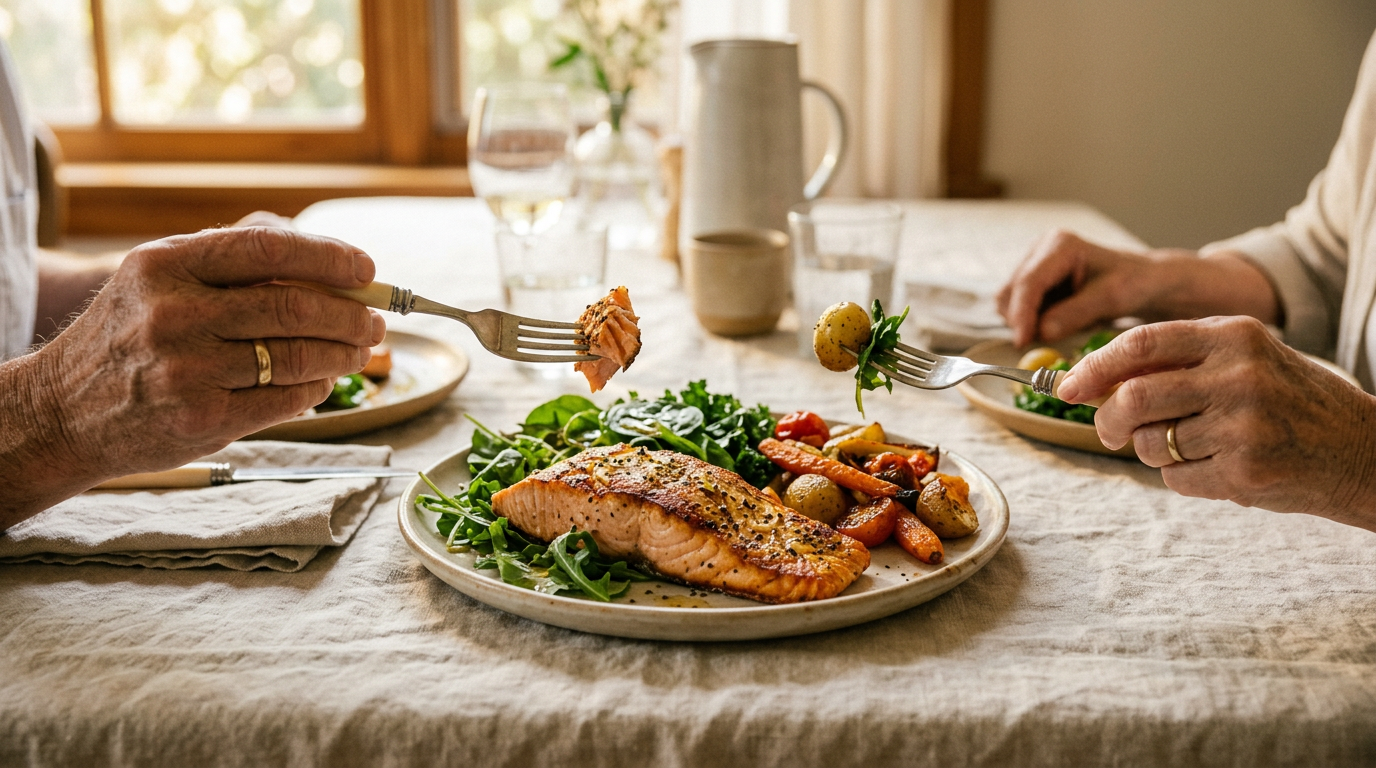
After 70, calorie needs drop but nutrient needs don't. That math is cruel — every bite has to work harder. The result is widespread under-nutrition in older adults who appear, on the surface, to be eating fine.
Protein is non-negotiable
Aim for 25–30 grams of protein at each meal. Eggs, Greek yogurt, cottage cheese, fish, chicken, beans, tofu. Without enough protein, muscle loss accelerates — and muscle is what prevents falls and preserves independence.
Hidden vitamin gaps
Vitamin B12 absorption decreases sharply after 60 — a deficiency causes fatigue and confusion that's often blamed on aging. Vitamin D is low in nearly everyone in Michigan winters. Both are easily checked with a blood test and easily corrected.
When eating becomes hard
Soft, flavorful, easy-to-chew foods. Smoothies with protein powder, banana, peanut butter, and Greek yogurt deliver a meal in ten minutes. Soups with shredded chicken. Eggs every which way. Don't underestimate the power of company — most older adults eat 30% more when someone is eating with them.
When to worry
Unintentional weight loss of 5% or more in a month, or 10% in six months, warrants a doctor's visit. So does new difficulty swallowing, persistent loss of appetite, or food avoidance.



When you're ready, we're here.
A free in-home assessment with one of our care managers — no pressure, no obligation. Just an honest conversation about what would actually help.