
Memory Care at Home
Care that adapts as the disease changes.
Dementia doesn't move in a straight line. Some weeks are softer than others. The right caregiver knows how to read the day in front of them — and how to bring the calm back into the room.
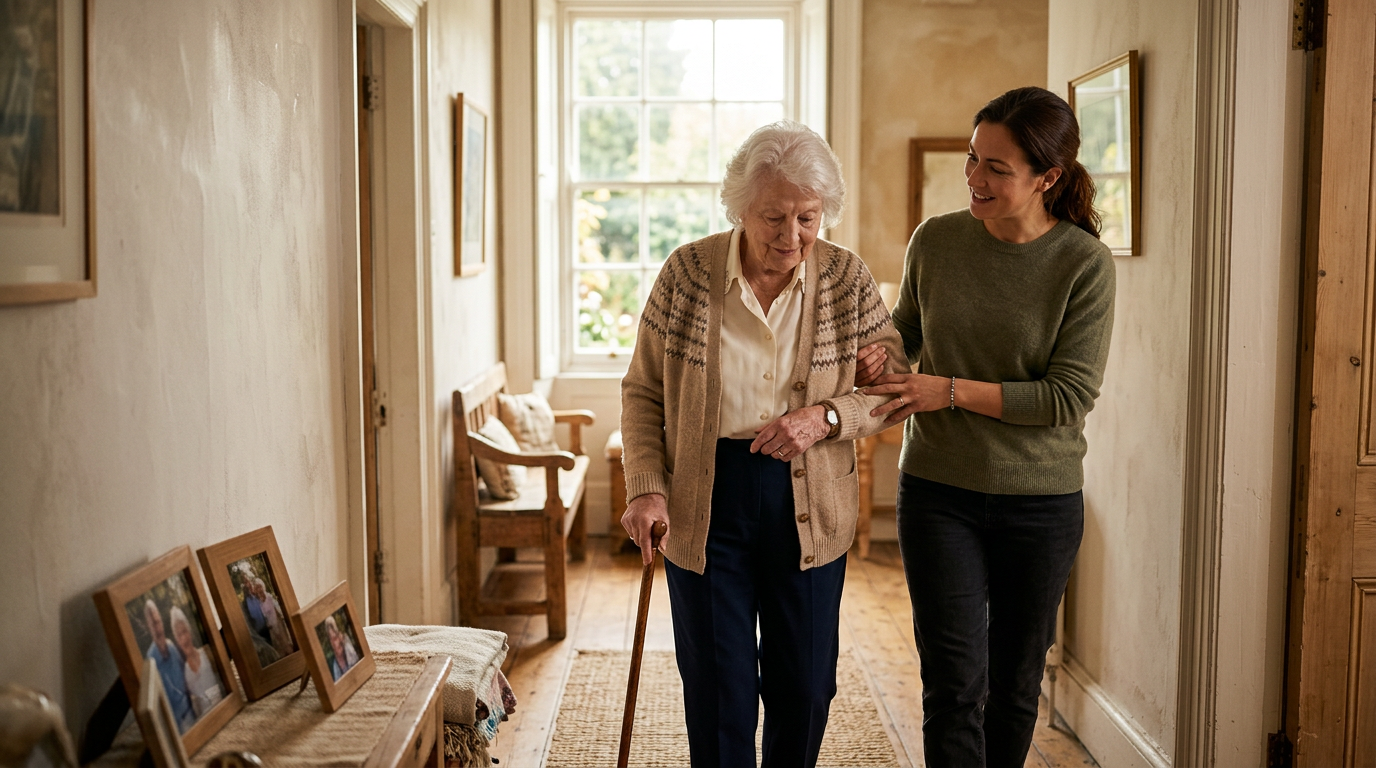
A quiet check-in
Does any of this sound like the last few weeks at home?
Most families don't call us at the easy part. They call after a stretch of days like these:
- The same question, asked five times in an hour
- Sundowning that turns 4 p.m. into the hardest part of the day
- Meals skipped because the kitchen feels confusing
- A spouse or adult child who hasn't slept through the night in months
- A caregiver before us who tried — and your loved one wouldn't accept the help
2-Minute Care Assessment
Not sure what level of care your family needs?
Eight honest questions, two minutes, a personalized recommendation. No obligation, no pressure — just clarity.
Used by 200+ Oakland, Macomb & Wayne County families
What happens if nothing changes
Untreated agitation gets worse, not better. The home that used to feel safe starts to feel like a place where someone is always on guard. Falls become more likely. The family caregiver, exhausted, makes harder decisions in worse moods than they would on a full night's sleep.
Most families wait six to nine months longer than they should before bringing in trained help. The grief of that delay is real — and avoidable.
Ready to talk through memory care?
A free in-home assessment takes about an hour. No pressure, no contracts — just a clear plan you can keep or set aside.
What changes
What changes inside the first two weeks
A small, dementia-trained team, the same faces every visit, and the kind of structured day that quietly lowers the temperature of the whole house.
A specific routine, written down
Wake-up, breakfast, walk, music, lunch, rest, afternoon activity, dinner, wind-down. The same rhythm every day so the brain doesn't have to figure out what comes next.
Measured improvement we share with you
After every shift you receive a brief note — what was eaten, how mood was, any sundowning, sleep, behavior changes worth tracking.
Reachable, achievable behavior plans
When agitation appears, we use validation techniques first, redirection second, and call you only when something has actually changed. Not for every hard moment.
Relevant to where the disease actually is
Early-stage care looks different from middle-stage care. We re-assess every 60 days and adjust the plan, the activities, and the hours together.
A clear timeline, not a forever promise
Most families see a calmer home within 7–14 days. We'll tell you what to watch for, and what to do if it's not landing.
Day to day
What a memory care shift actually looks like
Quiet, paced, and built around your loved one — not around a clipboard.
- Same caregiver, every visit, with one consistent backup
- Personalized music, photos, and activities from their own life story
- Hands-on personal care delivered with patience and dignity
- A care manager who knows the family and adjusts the plan as needs shift
- Family communication after every shift — not just when something goes wrong
What families ask
What families ask first
What if mom refuses help, like she did last time?
We expect it. The first visit is short and unhurried. We bring no clipboard, no agenda — just one caregiver, matched on personality, who knows how to enter a room without taking it over.
What about the difficult moments — the agitation, the accusations?
Our caregivers train monthly in dementia-specific communication. They don't argue, don't correct, and don't take it personally. Most of the hardest moments end faster than families expect.
Can you start with just a few hours?
Yes. Most families begin with 12–20 hours a week and grow from there as trust forms.
Practical questions
The things families actually ask about memory care
Logistics, cost, scheduling, training — the day-to-day worries, answered the way we'd answer them at your kitchen table.
Are your caregivers actually trained in dementia, or is it just a checkbox?
Every memory-care caregiver completes dementia-specific training before their first shift — including validation technique, redirection, sundowning protocols, and safe response to agitation. We retrain quarterly as the research evolves.
What's the minimum number of hours we have to commit to?
We start as small as a 4-hour visit, two days a week. Most families build up from there once they see how their loved one responds. There's no long-term contract.
How quickly can care actually start?
For most Oakland, Macomb, and Wayne County families, we can have the right caregiver in the home within 48–72 hours of your free assessment. Urgent post-hospital situations can often start same-day.
What does it cost — honestly?
Memory care runs a few dollars an hour above standard companion care because of the specialized training. We give you a written, all-in hourly rate at the assessment — no surprise fees, no minimums hidden in the fine print.
What if mom is having a really bad day and the caregiver can't manage?
Our caregivers are trained to de-escalate first, document second, and call our on-call nurse third. You'll get a same-day update. We never leave a family alone in a crisis moment.
Related services
Companion Care
Conversation, walks, hobbies, light meal prep, and the simple presence that keeps an older adult from spending the whole day alone — often the first kind of help a family brings in.
Personal Care
Bathing, dressing, grooming, toileting, incontinence care, mobility assistance, transfers, and standby help — all delivered with patience and respect for dignity.
Overnight Care
A trained caregiver in the home from evening to morning — awake and watchful — so the family can finally sleep through the night.
24-Hour & Live-In Care
Round-the-clock coverage with a primary caregiver and a small dedicated team, so coverage never has a gap and the same trusted faces stay close.
When you're ready, the first conversation is free.
A care manager will sit with you in your home for about an hour. No paperwork pressure, no obligation — just an honest read on what would actually help.