
Overnight Care
So you can finally close your eyes.
There is a particular exhaustion that comes from sleeping with one ear open. Most family caregivers haven't truly slept in months. Overnight care exists for exactly this.
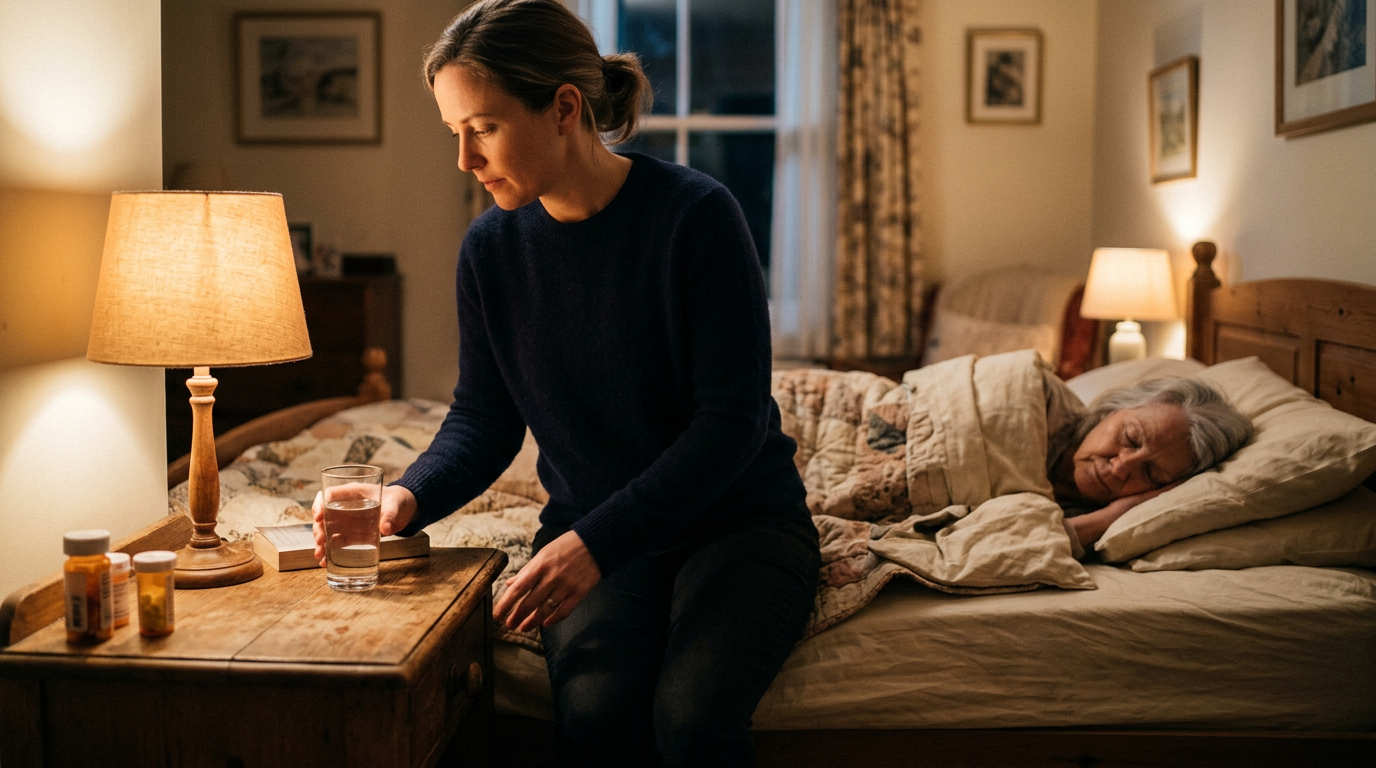
A quiet check-in
Do the nights look anything like this?
Families call us about overnight care after weeks of nights like these:
- Wandering toward the front door at 2 a.m.
- Sundowning that lasts long past sundown
- Falls on the way to the bathroom
- A loved one calling out, repeatedly, for someone who isn't there
- A spouse who naps in shifts and apologizes for it
2-Minute Care Assessment
Not sure what level of care your family needs?
Eight honest questions, two minutes, a personalized recommendation. No obligation, no pressure — just clarity.
Used by 200+ Oakland, Macomb & Wayne County families
Why chronic sleep loss matters
Six months of broken sleep raises a caregiver's risk of depression, heart disease, and serious illness. It also dulls judgment — exactly the judgment your loved one is depending on.
And the unsafe nights have their own cost. Most serious dementia injuries happen between midnight and dawn. Awake, trained presence prevents most of them.
Ready to talk through overnight care?
A free in-home assessment takes about an hour. No pressure, no contracts — just a clear plan you can keep or set aside.
What changes
What an overnight caregiver actually does
An awake, watchful presence in the home from evening through morning, so the rest of the household can sleep — and the night stops being the most dangerous part of the day.
A specific evening wind-down routine
Lights, music, snacks, toileting, medication — the same calm sequence every night, designed to make sleep more likely and waking less likely.
Measurable sleep changes you'll notice
Most families report meaningful sleep improvement within the first week. We track and share what we see.
Achievable response to night waking
When your loved one wakes, our caregiver is already there — quiet voice, dim light, gentle redirection. No one has to come down the hall.
Relevant safety presence
Wandering is intercepted before the front door. Falls on the way to the bathroom are walked beside, not picked up after.
A clear time window
Typical shifts run 8 p.m. to 8 a.m. or 10 p.m. to 6 a.m. — we'll match the hours to the actual hardest part of your night.
Day to day
What an overnight shift looks like
Awake, attentive, and quiet.
- Calm evening routine and medication support
- Discreet presence near the bedroom — never asleep on shift
- Toileting and rehydration support during the night
- Gentle redirection during sundowning or confusion
- A morning handoff note so daytime caregivers and family know how the night went
What families ask
What families ask first
Will mom even let someone in the house overnight?
Yes — almost always, after the right introduction. The first overnight is preceded by a few daytime visits with the same caregiver, so the face is already familiar.
Are overnight caregivers actually awake?
Yes. Our overnight rate reflects that. We do not staff sleep-shifts on dementia cases.
Practical questions
The things families actually ask about overnight care
Logistics, cost, scheduling, training — the day-to-day worries, answered the way we'd answer them at your kitchen table.
Is the caregiver awake the whole shift, or sleeping?
Awake. Our overnight shifts are awake-and-active — checking on your loved one, responding to wandering, helping with bathroom trips, and being present if they wake confused.
What hours does an overnight shift cover?
Standard is 10 p.m. to 6 a.m., but we'll shape the window around your loved one's actual sleep pattern. Some families start at 8 p.m. when sundowning hits hardest.
Can we start with just a few overnights a week?
Yes. Many families begin with two or three nights — usually the hardest ones — and add more once everyone is sleeping again.
Do we have to be home, or can we travel?
You can travel. Overnight caregivers can be scheduled solo or paired with daytime visits to provide full coverage while you're away.
How do you handle wandering or someone trying to leave the house at 3 a.m.?
With redirection first, never restraint. Caregivers are trained to use calm verbal cues, environmental adjustments, and door alerts. We document every episode and adjust the care plan if patterns emerge.
Related services
Memory Care
Our specialty. The same dementia-trained caregiver every visit, calm routines, behavior support, and engagement that meets your loved one where they are.
Companion Care
Conversation, walks, hobbies, light meal prep, and the simple presence that keeps an older adult from spending the whole day alone — often the first kind of help a family brings in.
Personal Care
Bathing, dressing, grooming, toileting, incontinence care, mobility assistance, transfers, and standby help — all delivered with patience and respect for dignity.
24-Hour & Live-In Care
Round-the-clock coverage with a primary caregiver and a small dedicated team, so coverage never has a gap and the same trusted faces stay close.
Tonight doesn't have to look like last night.
Tell us what your nights have been like. We'll talk through what overnight care could look like in your home — and how soon we could start.