
Meal Preparation & Nutrition
Real meals. Eaten together.
Older adults who eat alone eat less. Older adults who eat less lose muscle. Lost muscle is what falls are made of. The kitchen is a quieter place than it looks.
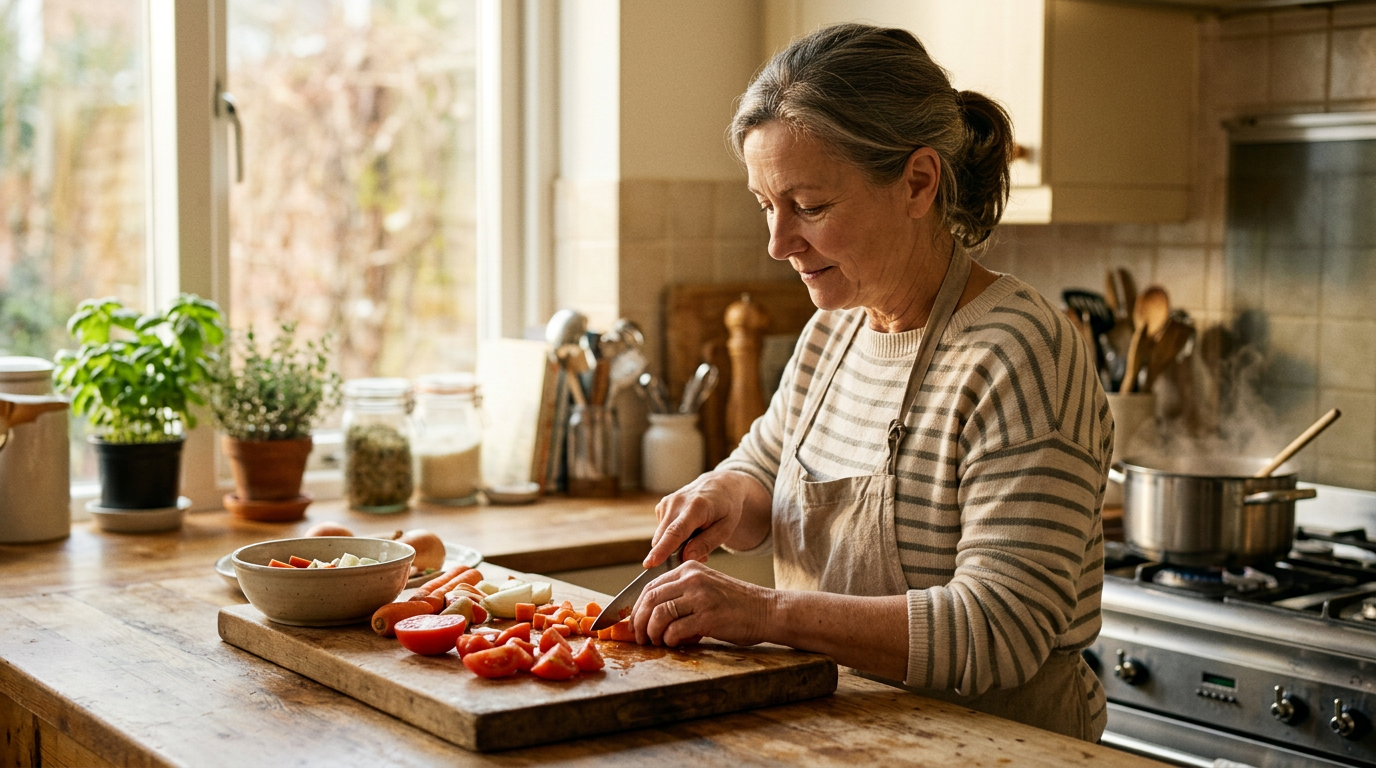
A quiet check-in
Have you noticed any of this in the kitchen?
Nutrition slips quietly. The signs:
- Spoiled food in the fridge that no one ate
- Repeated meals — toast, cereal, the same frozen dinner
- Visible weight loss, looser clothing, sharper bones
- Skipped lunches, then large compensatory snacks
- A loved one who insists they 'just ate' when they didn't
2-Minute Care Assessment
Not sure what level of care your family needs?
Eight honest questions, two minutes, a personalized recommendation. No obligation, no pressure — just clarity.
Used by 200+ Oakland, Macomb & Wayne County families
Why this matters more than it looks
Mild malnutrition in older adults is widespread — and almost always missed. It causes fatigue blamed on aging, infections blamed on bad luck, and confusion blamed on dementia.
Restoring real meals, eaten with company, is one of the most dramatic interventions we see in our work.
Ready to talk through meals & nutrition?
A free in-home assessment takes about an hour. No pressure, no contracts — just a clear plan you can keep or set aside.
What changes
What good food support actually does
Real meals matched to taste and dietary needs, eaten with company, quietly returning energy and steadiness to the day.
A specific weekly menu
Built from what they actually love — not a generic 'senior diet.' Reviewed with the family every two weeks.
Measurable intake tracking
Calories, protein, and hydration informally tracked. We notice sooner than anyone else does when something slips.
Achievable, doctor-aligned dietary care
Diabetes, low-sodium, soft-chew, swallowing precautions, kidney-friendly — handled without making meals feel medical.
Relevant grocery and prep support
Lists, shopping, putting away, prepping, cooking, plating, and yes — sitting at the table while it's eaten.
A clear escalation if intake drops
If we see weight loss, refusal, or swallowing trouble, we flag it to family and (with permission) the doctor — fast.
Day to day
What meal support looks like at home
Familiar food, gently encouraged, eaten in good company.
- Weekly meal planning around taste and diet
- Grocery lists, shopping, and putting everything away
- Cooking from scratch or smart use of what's on hand
- Hydration check at every shift
- Sitting with your loved one while they eat
What families ask
What families ask first
Mom only wants to eat the same three things.
We start with those three things. Familiar food restores appetite first. Variety can come later — gently, if at all.
Practical questions
The things families actually ask about meals & nutrition
Logistics, cost, scheduling, training — the day-to-day worries, answered the way we'd answer them at your kitchen table.
Will the caregiver cook things mom actually likes?
Yes — we ask for her favorites at the assessment and build a rotating menu around them. Familiar food is half the battle with appetite loss.
What about diabetic, low-sodium, or renal diets?
We follow physician-ordered diets and document intake. If the diet is complex, we'll loop in a dietitian or the visiting nurse for a quick care-plan review.
Do you cook from scratch or heat things up?
From scratch when there's time, simple from-scratch when there isn't. We don't believe in microwaving frozen dinners and calling it a meal.
Will you do the grocery shopping too?
Yes — either with your loved one (great for engagement) or solo with your card on file. We bring receipts every time.
How do you handle days when she just won't eat?
We document the refusal, try smaller and softer options, and report any pattern. Sustained appetite loss gets a same-day call to you.
Related services
Memory Care
Our specialty. The same dementia-trained caregiver every visit, calm routines, behavior support, and engagement that meets your loved one where they are.
Companion Care
Conversation, walks, hobbies, light meal prep, and the simple presence that keeps an older adult from spending the whole day alone — often the first kind of help a family brings in.
Personal Care
Bathing, dressing, grooming, toileting, incontinence care, mobility assistance, transfers, and standby help — all delivered with patience and respect for dignity.
Overnight Care
A trained caregiver in the home from evening to morning — awake and watchful — so the family can finally sleep through the night.
Let's start with one good week of meals.
We'll plan it with you — and with your loved one. The goal isn't perfect nutrition. It's the table feeling lived in again.