
Transportation & Errands
Out of the house. Safely.
When driving stops being safe, the world shrinks fast. The right transportation support is the difference between losing the keys and losing the life behind them.
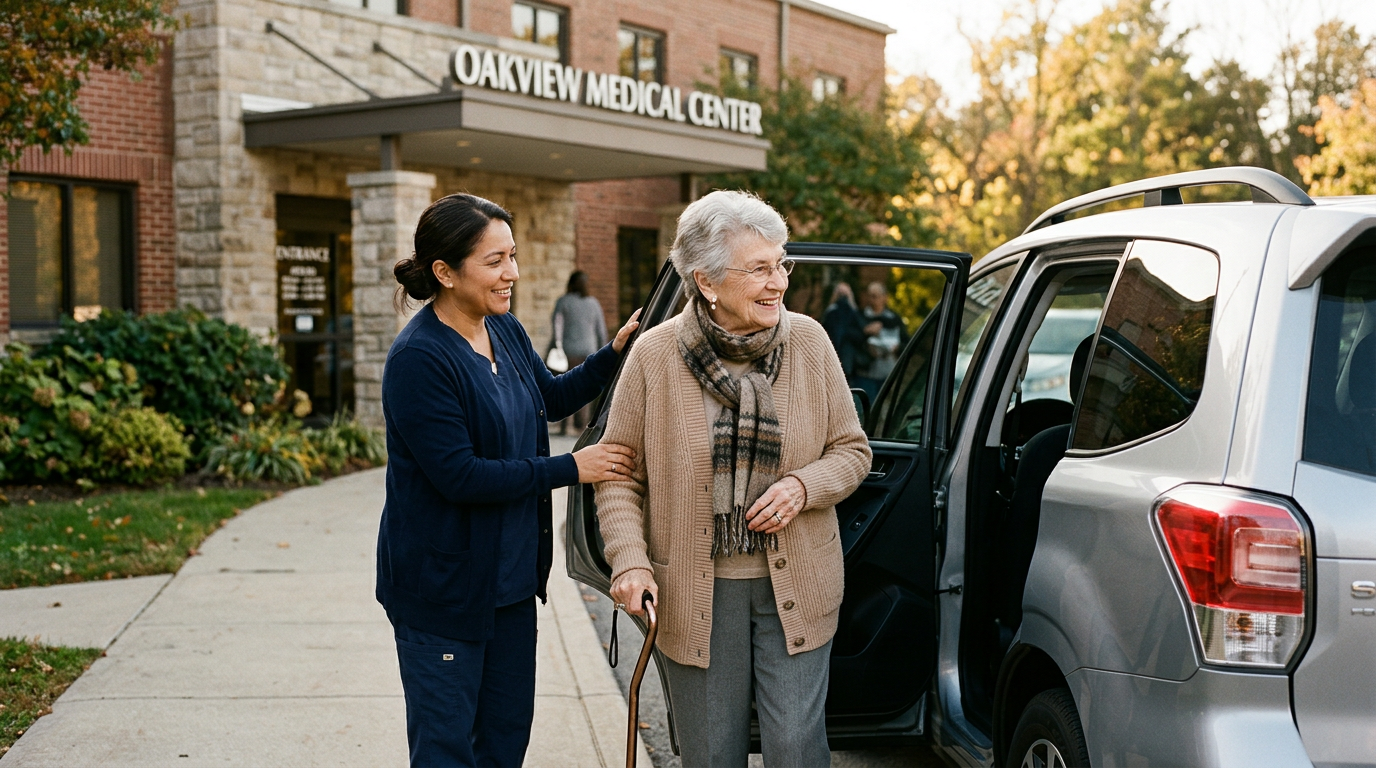
A quiet check-in
Has driving become a worry?
The honest signs it might be time:
- New scrapes on the bumper no one wants to mention
- Missed appointments because driving felt too hard that day
- A loved one who's stopped going to church, the salon, or family gatherings
- Adult children juggling work to drive to every appointment
- An expired license — or one that's still valid but probably shouldn't be
2-Minute Care Assessment
Not sure what level of care your family needs?
Eight honest questions, two minutes, a personalized recommendation. No obligation, no pressure — just clarity.
Used by 200+ Oakland, Macomb & Wayne County families
What giving up the keys actually costs
Stopping driving is one of the most under-discussed losses of aging. Many older adults experience it as a profound shrinking of identity — and the data shows depression rates rise sharply in the year after.
Reliable transportation that doesn't require asking family for a favor protects far more than just appointments.
Ready to talk through transportation & errands?
A free in-home assessment takes about an hour. No pressure, no contracts — just a clear plan you can keep or set aside.
What changes
What good transportation support does
Door-to-door, accompanied transportation that keeps the calendar of a real life going — without leaning on the family.
A specific weekly schedule
Doctors, hair, church, lunch out, family visits. Recurring rides scheduled in advance — no last-minute scramble.
Measurable reliability
On-time arrivals tracked. We arrive 10 minutes early, every time. Missed appointments are basically zero.
Achievable accompaniment
We don't drop and disappear. We walk into the appointment, take notes when invited, and bring the summary home.
Relevant safety on every trip
Caregivers drive their own clean, insured vehicles. Mobility transfers handled with proper technique.
A clear, honest pricing model
We don't charge mileage. The shift rate covers the driving. No surprises.
Day to day
What transportation support looks like
Punctual, accompanied, and unrushed.
- Doctor and specialist appointments, with note-taking when invited
- Pharmacy, grocery, and personal errands
- Hair, nails, church, and social outings
- Family visits and special occasions
- Same caregiver each time, whenever possible
What families ask
What families ask first
Dad refuses to give up driving. Where do we start?
Most don't give it up — they slowly use it less. We can start as a 'second car' family member who drives for the longer trips. The keys often follow naturally.
Practical questions
The things families actually ask about transportation & errands
Logistics, cost, scheduling, training — the day-to-day worries, answered the way we'd answer them at your kitchen table.
Do you drive your own car or our parent's?
Either works. Caregivers are insured to drive client vehicles, and we have company cars available when needed.
Will the caregiver come into the appointment?
Yes — door-through-door. We sit in the waiting room, take notes during the visit if you want us to, and bring questions back to you.
What about a wheelchair or walker?
We're trained in safe transfers and assistive-device transport. For full wheelchair vans, we coordinate with a medical-transport partner.
Can you help with errands too — pharmacy, bank, hair appointment?
Yes. Most transportation visits include one or two stops. We plan the route with you ahead of time so the day isn't overwhelming.
What if there's a problem at the appointment — bad news, a fall, confusion?
The caregiver calls you the same minute, documents what was said, and waits with your loved one until you decide on next steps. Nobody gets sent home alone with hard news.
Related services
Memory Care
Our specialty. The same dementia-trained caregiver every visit, calm routines, behavior support, and engagement that meets your loved one where they are.
Companion Care
Conversation, walks, hobbies, light meal prep, and the simple presence that keeps an older adult from spending the whole day alone — often the first kind of help a family brings in.
Personal Care
Bathing, dressing, grooming, toileting, incontinence care, mobility assistance, transfers, and standby help — all delivered with patience and respect for dignity.
Overnight Care
A trained caregiver in the home from evening to morning — awake and watchful — so the family can finally sleep through the night.
Let's start with one ride this week.
Tell us a doctor's appointment, a salon visit, or a church Sunday. We'll be there ten minutes early.